Free PDF Steve Jobs, by Walter Isaacson
Durch das Herunterladen dieses Buch Soft-Datei können Sie starten die Überprüfung Steve Jobs, By Walter Isaacson ab jetzt. Es wird sicherlich nicht erforderlich, dass Sie ständig jedes Mal zu überprüfen. Juts benutzen, um Ihre zusätzliche Zeit auch paar Minuten. Aus diesem Grund, wenn Sie sehen möchten, wie Führungs Inhalt geliefert wird; Sie sollten es von der Vorderseite Webseite überprüfen. Ja, investieren Sie Ihre Zeit, es zu überprüfen. Dies ist unsere am meisten empfohlene Veröffentlichung zu überprüfen, wenn Sie für einige Reisen sowie Urlaub entscheiden wollen.
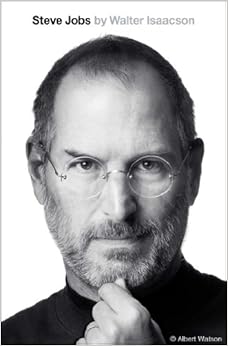
Steve Jobs, by Walter Isaacson

Free PDF Steve Jobs, by Walter Isaacson
Sie nicht im Auge über das Buch behalten, dass Sie ständig in jeder freien Zeit begleitet? Haben Sie, bis es überprüft? Wahrscheinlich werden Sie sicherlich neue Ressource benötigen zu nehmen, wenn Sie verbrannt werden mit der vorherige Veröffentlichung aus. Nun stellen wir noch einmal das wirklich großartige Buch, das vorgeschlagen wird. Guide ist nicht die magische Veröffentlichung, aber es ist etwas gelänge viel bête zu sein. Das Buch ist unter dem Steve Jobs, By Walter Isaacson
Wenn Sie ein Anfänger oder Besucher, die eine sind, die Liebe Lesung beginnen wollen, können Sie Steve Jobs, By Walter Isaacson als die beste Wahl. Dieses Buch ist unglaublich beliebt bei den Lesern. Dies ist einer der Gründe, warum wir empfehlen Ihnen, dieses Buch zu versuchen, zu lesen. Auch das ist nicht Art von Publikation, die riesige Chance geben wird; Sie könnte es detaillierte bekommen. Als das, was wir durch die Schritte immer wieder getan werden aufmerksam geworden herauszufinden kann. Sie können nicht auf einmal zur Kenntnis erhalten, indem alles zu tun, wird es einige Verfahren erfordern.
Ebenso ist es, was man sicherlich davon ab, dieses Buch als Empfehlung erhalten Sie Ihre Top-Qualität und auch Know-how zu verbessern. Es wird Ihnen genau zeigen, wie Art ein Buch ist. Jeder Satz und jede Web-Seite dieses Steve Jobs, By Walter Isaacson finden Sie brandneuen Punkt offenbaren. Es wird sicherlich nicht zwingen Sie im Sinne alle Sätze zu erkennen oder zu halten. Die meisten Punkte immer im Auge behalten die Lektion oder eine Nachricht ist, die in dieser Publikation informiert wird.
Und die Gründe sollten Sie dies geriet Buch auszuwählen ist, dass es von einem unglaublich beliebten Autor auf dem Planeten geschrieben. Sie können nicht in der Lage sein, diese Veröffentlichung zu bekommen leicht; das ist, warum wir Ihnen hier zur Linderung bieten. Als einfach zu bekommen führen tatsächlich kommt zu sein der erste Schritt zu beenden zu überprüfen. Oft werden Sie sicherlich Probleme haben die Steve Jobs, By Walter Isaacson draußen zu entdecken. Doch gerade hier, Sie werden diese Frage nicht begegnen.
Über den Autor und weitere Mitwirkende
Walter Isaacson, University Professor of History at Tulane, has been CEO of the Aspen Institute, chairman of CNN, and editor of Time magazine. He is the author of Leonardo da Vinci; The Innovators; Steve Jobs; Einstein: His Life and Universe; Benjamin Franklin: An American Life; and Kissinger: A Biography, and the coauthor of The Wise Men: Six Friends and the World They Made. Facebook: Walter Isaacson, Twitter: @WalterIsaacson
Leseprobe. Abdruck erfolgt mit freundlicher Genehmigung der Rechteinhaber. Alle Rechte vorbehalten.
Excerpt 1 His personality was reflected in the products he created. Just as the core of Apple’s philosophy, from the original Macintosh in 1984 to the iPad a generation later, was the end-to-end integration of hardware and software, so too was it the case with Steve Jobs: His passions, perfectionism, demons, desires, artistry, devilry, and obsession for control were integrally connected to his approach to business and the products that resulted. The unified field theory that ties together Jobs’s personality and products begins with his most salient trait: his intensity. His silences could be as searing as his rants; he had taught himself to stare without blinking. Sometimes this intensity was charming, in a geeky way, such as when he was explaining the profundity of Bob Dylan’s music or why whatever product he was unveiling at that moment was the most amazing thing that Apple had ever made. At other times it could be terrifying, such as when he was fulminating about Google or Microsoft ripping off Apple. This intensity encouraged a binary view of the world. Colleagues referred to the hero/shithead dichotomy. You were either one or the other, sometimes on the same day. The same was true of products, ideas, even food: Something was either “the best thing ever,” or it was shitty, brain-dead, inedible. As a result, any perceived flaw could set off a rant. The finish on a piece of metal, the curve of the head of a screw, the shade of blue on a box, the intuitiveness of a navigation screen—he would declare them to “completely suck” until that moment when he suddenly pronounced them “absolutely perfect.” He thought of himself as an artist, which he was, and he indulged in the temperament of one. His quest for perfection led to his compulsion for Apple to have end-to-end control of every product that it made. He got hives, or worse, when contemplating great Apple software running on another company’s crappy hardware, and he likewise was allergic to the thought of unapproved apps or content polluting the perfection of an Apple device. This ability to integrate hardware and software and content into one unified system enabled him to impose simplicity. The astronomer Johannes Kepler declared that “nature loves simplicity and unity.” So did Steve Jobs. Excerpt 2 For Jobs, belief in an integrated approach was a matter of righteousness. “We do these things not because we are control freaks,” he explained. “We do them because we want to make great products, because we care about the user, and because we like to take responsibility for the entire experience rather than turn out the crap that other people make.” He also believed he was doing people a service: “They’re busy doing whatever they do best, and they want us to do what we do best. Their lives are crowded; they have other things to do than think about how to integrate their computers and devices.” This approach sometimes went against Apple’s short-term business interests. But in a world filled with junky devices, inscrutable error messages, and annoying interfaces, it led to astonishing products marked by beguiling user experiences. Using an Apple product could be as sublime as walking in one of the Zen gardens of Kyoto that Jobs loved, and neither experience was created by worshipping at the altar of openness or by letting a thousand flowers bloom. Sometimes it’s nice to be in the hands of a control freak. Jobs’s intensity was also evident in his ability to focus. He would set priorities, aim his laser attention on them, and filter out distractions. If something engaged him—the user interface for the original Macintosh, the design of the iPod and iPhone, getting music companies into the iTunes Store—he was relentless. But if he did not want to deal with something—a legal annoyance, a business issue, his cancer diagnosis, a family tug—he would resolutely ignore it. That focus allowed him to say no. He got Apple back on track by cutting all except a few core products. He made devices simpler by eliminating buttons, software simpler by eliminating features, and interfaces simpler by eliminating options. He attributed his ability to focus and his love of simplicity to his Zen training. It honed his appreciation for intuition, showed him how to filter out anything that was distracting or unnecessary, and nurtured in him an aesthetic based on minimalism. Unfortunately his Zen training never quite produced in him a Zen-like calm or inner serenity, and that too is part of his legacy. He was often tightly coiled and impatient, traits he made no effort to hide. Most people have a regulator between their mind and mouth that modulates their brutish sentiments and spikiest impulses. Not Jobs. He made a point of being brutally honest. “My job is to say when something sucks rather than sugarcoat it,” he said. This made him charismatic and inspiring, yet also, to use the technical term, an asshole at times. Andy Hertzfeld once told me, “The one question I’d truly love Steve to answer is, ‘Why are you sometimes so mean?’” Even his family members wondered whether he simply lacked the filter that restrains people from venting their wounding thoughts or willfully bypassed it. Jobs claimed it was the former. “This is who I am, and you can’t expect me to be someone I’m not,” he replied when I asked him the question. But I think he actually could have controlled himself, if he had wanted. When he hurt people, it was not because he was lacking in emotional awareness. Quite the contrary: He could size people up, understand their inner thoughts, and know how to relate to them, cajole them, or hurt them at will. The nasty edge to his personality was not necessary. It hindered him more than it helped him. But it did, at times, serve a purpose. Polite and velvety leaders, who take care to avoid bruising others, are generally not as effective at forcing change. Dozens of the colleagues whom Jobs most abused ended their litany of horror stories by saying that he got them to do things they never dreamed possible. Excerpt 3 The saga of Steve Jobs is the Silicon Valley creation myth writ large: launching a startup in his parents’ garage and building it into the world’s most valuable company. He didn’t invent many things outright, but he was a master at putting together ideas, art, and technology in ways that invented the future. He designed the Mac after appreciating the power of graphical interfaces in a way that Xerox was unable to do, and he created the iPod after grasping the joy of having a thousand songs in your pocket in a way that Sony, which had all the assets and heritage, never could accomplish. Some leaders push innovations by being good at the big picture. Others do so by mastering details. Jobs did both, relentlessly. As a result he launched a series of products over three decades that transformed whole industries. Was he smart? No, not exceptionally. Instead, he was a genius. His imaginative leaps were instinctive, unexpected, and at times magical. He was, indeed, an example of what the mathematician Mark Kac called a magician genius, someone whose insights come out of the blue and require intuition more than mere mental processing power. Like a pathfinder, he could absorb information, sniff the winds, and sense what lay ahead. Steve Jobs thus became the greatest business executive of our era, the one most certain to be remembered a century from now. History will place him in the pantheon right next to Edison and Ford. More than anyone else of his time, he made...
Produktinformation
Gebundene Ausgabe: 656 Seiten
Verlag: Simon & Schuster; Auflage: First Printing (24. Oktober 2011)
Sprache: Englisch
ISBN-10: 1451648537
ISBN-13: 978-1451648539
Größe und/oder Gewicht:
15,5 x 4,8 x 23,5 cm
Durchschnittliche Kundenbewertung:
3.6 von 5 Sternen
289 Kundenrezensionen
Amazon Bestseller-Rang:
Nr. 66.814 in Fremdsprachige Bücher (Siehe Top 100 in Fremdsprachige Bücher)
Anhand der Produktvorstellungen des Macintosch (1984), NeXt (1988) und iMac (1998) zeigt dieses BioPic eine Charakterstudie von Steve Jobs. Wir sehen immer etwa 40 Minuten (Hollywoodtypisches 3-Akte Schema) vor Beginn der Vorstellungen eine Art Querschnitt im Leben von Steve Jobs, herrlich gespielt von Michael Fassbender (schade das der Hauptdarsteller-Oscar 2016 an Leonardo DiCaprio gehen musste). Wir können unseren Protagonisten dabei begleiten, wie er Instruktionen erteilt, wie er mit seiner "Familie" agiert und seinen Mitarbeitern.Grundsätzlich gilt zum Genre des BioPic's zu sagen, das es hochproblematisch ist. Diese Filme zeigen von der Wiege bis zum Grabe chronologisch in Form von Heiligenlegenden das Leben einer bedeutenden Persönlichkeit. BioPic's schwärmen von ihren Helden, ohne aber zu zeigen, was diese Person eigentlich ausmacht: Die Arbeit. Stattdessen werden wir mit Trivialitäten bombardiert. Die meisten dieser Filme langweilen. Dieses BioPic ist eine rühmliche und meisterhafte Ausnahme.Wir haben es hier mit einer analytischen Kameraarbeit (Alwin H. Küchler) zu tun, welche die Machtverhältnisse offen legt. Wir haben durch Aaron Sorkin (Drehbuch) wunderbare Dialoge, die ganz präzise Steve Jobs charakterisiert, ebenso sein gesamtes Imperium. Und der Film zeigt uns die Kunst des Weglassens, den er berichtet von Sachen, die wir nicht wissen. Sachen, die wir nicht aus den Nachrichten kennen. Zum Beispiel erfahren wir das Steve Jobs weder Ingenieur, noch Designer oder gar Handwerker war. Aber was war dann? Ein absolutistischer Regent, der die Kunst des Krieges beherrschte. Im Silicon-Valley bedeutet das Disrubtion: Gerade Märkte, welche friedlich funktionieren immer wieder zu erschüttern, Kriege enstehen zu lassen um das Imperium wachsen zu lassen (Stichwort: iPod, gegen Ende des Filmes). Ebenso baute Steve Jobs Festungen im Form von geschlossenen Systemen, um dadurch alles Feindliche zu eliminieren. Jede Hard- oder Software, die in sein System eindringt würde Konkurrenz bedeuten. Desweiteren war er ein Kind der 70er Jahre, einer Zeit in der das Private ebenso das Politische war, (ein Thema, das sogar heute noch im Silicon-Valley existiert). Und dies nimmt Danny Boyle (Regie) beim Wort. Er schraubt die Appleprodukte auf und zeigt was in ihnen steckt. Er zeigt uns Sachen, die wir nicht aus dem Apple-Store kennen.Wie kann es sein, das so ein Film an der Kinokasse floppt? Ja, er ist unkonventionell (für ein BioPic), doch wohl eher, das Steve Jobs für viele ein Held, sogar ein Gott ist. Für viele sind die Appleprodukte heilige Gegenstände. Doch wenn ihn Leute für einen Gott halten, ist er dann noch menschlich? Zum Glück war er kein Gott und Danny Boyle zeigt uns das Menschlichkeit ebenso positive, wie negative Dimensionen hat.
I'm writing this on an Android phone, with a Linux PC on the side. I'm not an Apple fanboy in this sense. Both of these wouldn't exist without Steve Jobs and Apple though. Apple still makes the most well designed devices around. It's the end-to-end control aspect which, funny enough, doesn't jibe with my sense of wanting control over my devices.I've been fascinated by the presentation skills and design sense of Steve Jobs, do I have this Biography a try. It's much more than I expected, and you can only really understand once you experience it. Walter Isaacson did an amazing job. The movie version didn't do it any Justice btw.
Es wird geredet, geredet, geredet - und das Leben an sich verhandelt, jeweils in der Stunde vor der nächsten Präsentation. Phantastischer Erzähltrick!Noch unfassbarer als Fassbenders Leistung fand ich die von Kate Winslet. Die ist auch mit eulenhafter Brille und Knitterrock every inch a star.Absolut sehenswert!
Dass mein erster Computer ein Apple war, und ich der Marke bis heute treu geblieben bin, spielt für das Interesse an diesem Buch nur eine untergeordnete Rolle.Der Mensch Jobs - in sich zerrissen. Arrogant und überheblich. Sensibel und verletzlich. Mir wurde dieses Buch von einem Freund empfohlen, und selten hat eine Buchempfehlung meinen Lesegeschmack so auf den Punkt getroffen. Hochinteressante und emotional bewegende Lektüre. Ja, mir standen an einigen Stellen die Tränen in den Augen …
Der Film als solcher ist ganz gut, zeigt Steve Jobs aus einer anderen Perspektive. Es geht hauptsächlich um persönliche Dinge, speziell das Verhältnis zu bestimmten Personen, in erster Linie das Verhältnis zu seiner Tochter. Der Film zeigt einen Vater, der anders ist, als ich ihn mir vorgestellt habe. Allerdings hatte ich von dem Film etwas anderes erwartet. Bei Steve Jobs denkt man unweigerlich an angebissene Äpfel und das Auf und Ab eines Unternehmens. Diese Reise wird praktisch nur abgeschnitten. Insgesamt aber durchaus interessant.
Am Anfang hielt ich den Film ziemlich für schleppend und zum Schluss wollte ich nicht das der Film endet, es könnte daran liegen, dass man am Anfang auch einfach ins geschehen hinein geworfen wird (meiner Meinung nach) und sich die Rollen, außer die von Michael Fassbender, erst im Film verlauf erklären.Später wenn jede Besetzung klar ist hat mich der Film noch mehr in den Bann gezogen, und zum Schluss dachte ich mir: " Das kann noch NICHT alles gewesen sein, da MUSS doch noch etwas kommen!"
Steve Jobs, by Walter Isaacson PDF
Steve Jobs, by Walter Isaacson EPub
Steve Jobs, by Walter Isaacson Doc
Steve Jobs, by Walter Isaacson iBooks
Steve Jobs, by Walter Isaacson rtf
Steve Jobs, by Walter Isaacson Mobipocket
Steve Jobs, by Walter Isaacson Kindle
